Does Paint and Primer in One Really Work?

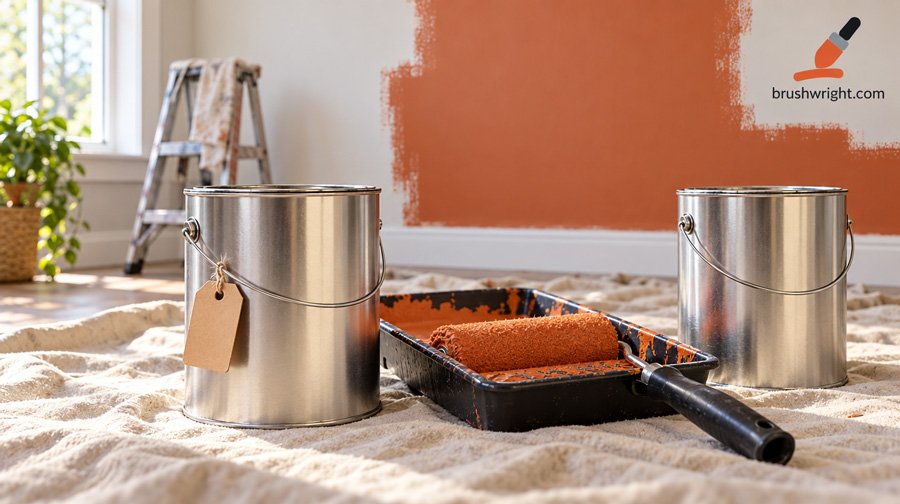
Paint and primer in one works well when you’re repainting a clean, sound wall that already has latex paint on it, in a similar color: it hides well, often saves a coat, and you don’t need a separate primer. It is not a substitute for a dedicated primer on new drywall, fresh patches, water or smoke stains, glossy or oil-based paint, bare wood, masonry, or big color changes, because it isn’t designed to seal porous surfaces, block stains or bond to slick ones.
The phrase sounds like two products in one can, but it’s better understood as a thicker, higher-hiding paint. That’s useful, and it’s exactly why it can’t do the specialized jobs primers exist for.
What is paint and primer in one?
There isn’t an industry definition. Products labeled “paint and primer in one” or “self-priming” are generally premium paints with more solids, meaning more pigment and binder, than standard paint. That gives them better hide and a thicker film per coat, which can make the first coat behave like a primer on an already painted wall.
A dedicated primer is formulated differently. Depending on the type, it’s designed to soak into and seal porous surfaces evenly, to lock in stains so they can’t bleed through, or to grip glossy surfaces paint would slide off. Our guide to whether you need primer explains each kind.
So the honest comparison isn’t “paint plus primer versus paint alone.” It’s “a good, thick paint versus a specialized sealer.” On surfaces that don’t need sealing, the good paint is all you need. On surfaces that do, the sealer still matters.
Where paint and primer in one works
| Situation | Does paint and primer in one work? |
|---|---|
| Repainting sound latex walls, similar color | Yes, and it often hides in fewer coats |
| Going a shade or two lighter or darker | Yes |
| Walls with a few small, primed patches | Yes, once the patches are spot-primed |
| Clean, previously painted ceilings | Yes |
| Refreshing a room after normal wear | Yes |
In these cases the existing paint already provides the sealed, even surface a primer would create. A high-hiding paint just covers it efficiently.
Where you still need a separate primer
| Surface or problem | Why paint and primer in one isn’t enough | Primer to use |
|---|---|---|
| New drywall | Paper and joint compound absorb unevenly; seams show through | Drywall primer |
| Fresh spackle or joint compound patches | Patches flash as dull spots | Any water-based primer, spot-applied |
| Water, smoke, marker or nicotine stains | Stains bleed through water-based paint | Stain-blocking primer (oil or shellac) |
| Glossy paint or old oil-based paint | Paint can’t grip; it peels | Bonding primer, after scuff-sanding |
| Bare wood, knots | Tannins and sap bleed through | Stain-blocking primer |
| Masonry, concrete, block | Very porous and alkaline | Masonry primer or block filler |
| Dark color going much lighter | Takes many coats without a tinted primer | Gray-tinted primer |
| Bright or deep new color | Deep-base paints hide poorly | Primer tinted toward the new color |
| Walls after wallpaper removal | Adhesive residue can crack paint | Primer made to seal adhesive residue |
Our guides to painting new drywall, painting over dark walls and latex vs oil-based paint cover these situations in detail.
Does paint and primer in one save coats?
Sometimes. Over a sound wall in a similar color, a high-hiding paint can look finished after one coat where a standard paint would need two. But for durability and an even sheen, most paint labels and painters still recommend two coats, because two coats give the full film thickness the paint is designed for. Our guide to how many coats you need explains why the second coat matters even when the first looks good.
Where a combination product really saves effort is in skipping a separate primer step on walls that never needed one. It doesn’t remove the second coat.
Is it cheaper?
Not necessarily. Paint-and-primer products are usually premium lines and cost more per gallon than standard paint, and much more than a basic drywall primer. Whether they save money depends on the job:
- Repainting a sound wall in a similar color: a quality paint-and-primer product can save money if it gets you full coverage in two coats where cheaper paint needs three.
- New drywall: a separate drywall primer is almost always cheaper and works better. Priming 478 square feet of new walls and ceiling in a 12 × 12 ft room takes about 2 gallons of inexpensive primer; using premium paint as the first coat instead costs more and seals less evenly.
- Dark to light: a gray-tinted primer plus two coats of paint usually costs less than three or four coats of any paint, combination or not.
The primer calculator and the paint calculator let you compare the gallons for your room.
How to read the label
The front of the can sells; the back, and the product’s technical data sheet, tell you what it actually does. Look for:
- Recommended surfaces. Many paint-and-primer products list new drywall, stains or glossy surfaces as needing a separate primer. If the label says so, follow it.
- Coverage rate in square feet per gallon. A thicker product may cover slightly less area per gallon.
- Recoat time and number of coats recommended.
- Sheen. The “self-priming” benefit is the same in every sheen, but the right sheen still depends on the room; see our guide to paint sheens.
Common myths
“It has primer mixed in.” Not in the sense of a separate primer being blended with paint. It’s a paint formulated to hide and bond well on painted surfaces.
“You never need primer with it.” You still do on new drywall, stains, glossy or oil paint, bare wood and masonry.
“One coat is enough.” One coat may look good; two coats give durability and an even sheen.
“It stops peeling.” If paint is peeling because of moisture or a weak old layer, no paint fixes that. Our article on why paint peels explains how to find the cause.
Paint and primer in one, room by room
Bedrooms and living rooms. These are where combination products shine. Walls are usually already painted, clean and sound, and color changes are often modest. Fill and spot-prime nail holes, then paint two coats.
Bathrooms. Check for mildew and soap film first. Clean mildew off and spot-prime those areas with a stain-blocking primer; a combination product won’t stop mildew stains from showing through. Old bathrooms also often have glossy or oil-based paint, which needs a bonding primer. Our guide to painting a bathroom covers the full method.
Kitchens. Grease is the issue. Degrease thoroughly, and use a stain-blocking or bonding primer near the stove before any paint, combination or not. Our kitchen walls guide explains why.
Kids’ rooms. Crayon, marker and ink often bleed through water-based paint. Spot-prime marks with a shellac-based or oil-based stain blocker, then paint.
Ceilings. A painted ceiling in good shape can go straight to ceiling paint. Water stains need a stain-blocking primer first, every time.
Trim and doors. Trim is often old oil-based paint or glossy enamel. Test with rubbing alcohol; if it’s oil, scuff-sand and use a bonding primer before a water-based enamel.
What about exterior self-priming paints?
Many exterior paints are also sold as self-priming, and the same logic applies outside. Over sound, previously painted siding in good condition, a quality self-priming exterior paint can go on without a separate primer. Bare wood, especially cedar and redwood that bleed tannins, weathered or chalky surfaces, new fiber cement where the manufacturer specifies a primer, masonry and patched areas still need the right exterior primer. Always follow the siding manufacturer’s recommendations as well as the paint label.
What professional painters usually do
Most professional painters treat primer as a problem-solving tool rather than a routine first coat. On a sound repaint, they clean, patch, spot-prime the repairs and stains, and apply two coats of a good paint, whether or not it’s labeled as a paint and primer. On new drywall, they use an inexpensive drywall primer, often sprayed and back-rolled. Over stains, glossy surfaces or old oil paint, they use the specific primer for that job. Following the same approach gives you professional results and usually costs less than relying on premium combination products everywhere.
Signs you needed a primer after all
If you’ve already painted with a paint-and-primer product and something looks off, these are the usual clues:
| What you see | What it means | The fix |
|---|---|---|
| Dull or shiny patches over repairs | Flashing over unprimed spackle | Spot-prime the patches, then repaint the wall |
| Stripes along drywall seams | Uneven absorption on new drywall | Prime the whole wall with drywall primer, then repaint |
| Yellow or brown halos coming through | A stain bleeding through | Seal with a stain-blocking primer, then repaint |
| Paint scratching or peeling off easily | Poor bond to glossy or oil-based paint | Remove loose paint, scuff-sand, bonding primer, repaint |
| Old color still showing after two coats | Too big a color change | Gray- or color-tinted primer, then two coats |
None of these mean the paint was bad; they mean the surface needed a sealer, blocker or bonding coat that paint isn’t designed to be.
A quick decision checklist
Answer these about your wall:
- Is it already painted with latex, and is that paint clean and firmly attached?
- Are there no stains, and are all patches spot-primed?
- Is the new color within a few shades of the old one?
- Is the surface not glossy and not old oil-based paint?
If all four answers are yes, a paint-and-primer product, or simply a good-quality paint, is all you need. If any answer is no, use a dedicated primer for that problem first, then paint.
Frequently asked questions
Do I need primer if my paint says paint and primer?
Not on clean, sound, painted walls in a similar color. You still need a dedicated primer on new drywall, stains, glossy or oil-based paint, bare wood and masonry.
Can I use paint and primer in one on new drywall?
It’s not recommended. A dedicated drywall primer seals the paper and joint compound evenly and costs less per gallon.
Does paint and primer in one cover dark colors?
It hides better than standard paint, but going from a dark color to a much lighter one is still faster and cheaper with a gray-tinted primer first.
Is paint and primer in one worth it?
For repainting sound walls, a quality paint-and-primer product can save a coat and give excellent hide. For surfaces that need sealing or stain blocking, a separate primer is the better buy.
How many coats of paint and primer in one do I need?
Usually two for even color, sheen and durability, even if one coat looks close.
Can paint and primer in one cover stains?
Not reliably. Water, smoke and marker stains usually bleed through water-based paint. Seal them first with a stain-blocking primer.
Sources
- Product categories and primer types: manufacturer guidance for primers and self-priming paints; follow the label and technical data sheet of your product.
- Amounts: Brushwright calculation, 275 sq ft per gallon for primer on new drywall, plus 10%.
Estimates only. The coverage printed on your paint can and the product instructions are the numbers to trust.