Semi-Gloss vs Gloss Paint: Which Should You Use?

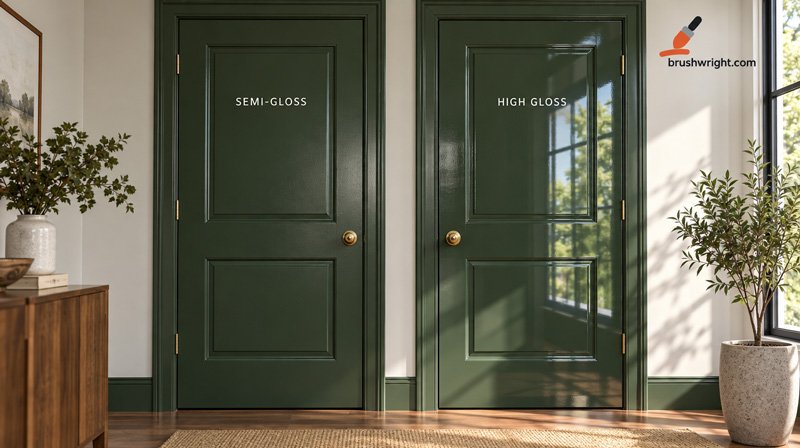
Semi-gloss is the standard finish for trim, doors, baseboards and cabinets: it’s hard-wearing, easy to clean and shiny enough to look crisp, but still forgiving of small surface flaws. Gloss and high-gloss paints are even tougher and reflect light like a mirror, which looks striking on front doors, furniture and statement trim, but they show every dent, brush mark and patch, so they need near-perfect preparation.
The practical rule: use semi-gloss unless you specifically want the dramatic, lacquered look of gloss and you’re willing to spend extra time on prep.
Semi-gloss vs gloss at a glance
| Semi-gloss | Gloss and high gloss | |
|---|---|---|
| Look | Clearly shiny, soft reflections | Very shiny to mirror-like, crisp reflections |
| Durability and washability | Excellent | Excellent, slightly harder film |
| Shows dents, patches, brush marks | Some | All of them |
| Prep needed | Clean, fill, scuff-sand, prime as needed | All of that plus fine sanding and a very smooth surface |
| Application | Brush and roller work well | Best sprayed, or carefully rolled and tipped off |
| Touch-ups | Moderately visible | Hard to hide |
| Best for | Trim, doors, baseboards, cabinets, bathroom trim | Front doors, furniture, statement trim, high-impact accents |
The gloss ranges come from the Master Painters Institute’s seven-level system, which many manufacturers use; the full scale is in our guide to paint sheens. Brand names vary, so one maker’s “gloss” may be close to another’s “high gloss.” Check the technical data sheet when it matters.
Why glossier paint shows more
Glossy paint has a high proportion of binder, which forms a smooth, hard film that reflects light in one direction, like a mirror. That reflection makes the surface look rich and deep, but it also outlines every bump, dent and ridge: each one bends the reflection and catches the eye. A dent you’d never notice under eggshell becomes obvious under high gloss, especially with light coming from the side.
Semi-gloss reflects strongly enough to look crisp and clean against flatter walls, but it softens reflections enough to forgive the small imperfections every real door and baseboard has.
Which one, where?
| Surface | Our pick | Why |
|---|---|---|
| Baseboards and casings | Semi-gloss | Durable, wipeable, forgiving; see our baseboards guide |
| Interior doors | Semi-gloss | Handled constantly; our interior doors guide covers technique |
| Kitchen and bathroom cabinets | Semi-gloss (or satin) | Tough, cleanable; see our cabinet paint guide |
| Front door | Gloss or high gloss | A statement surface, worth the extra prep |
| Furniture and built-ins | Gloss for a lacquered look, semi-gloss for everyday | Depends on the look and the wear |
| Stair railings and handrails | Semi-gloss or gloss | Hands all day; both clean easily |
| Walls | Rarely either | Too shiny for most walls; satin or eggshell instead |
| Bathroom walls | Satin; semi-gloss in very steamy rooms | Moisture resistance without too much glare |
| Statement trim in a dark color | Gloss | Deep colors look rich and lacquered in gloss |
Getting a smooth glossy finish
The glossier the paint, the more the surface underneath matters. For gloss and high gloss:
- Repair every dent and ding with wood filler or spackle and sand it perfectly flush.
- Sand the whole surface with fine grit, 220 and then 320 for gloss, until it’s smooth to the touch and evenly dull.
- Remove all dust with a vacuum and a tack cloth or barely damp microfiber cloth. Any speck shows.
- Prime bare wood, repairs and any glossy or oil-based paint with a suitable primer, then sand the primer lightly once it’s dry.
- Apply thin coats of a quality enamel that’s designed to level. Thick coats sag and run, which glossy paint exaggerates.
- Sand lightly between coats with a very fine sanding sponge, and remove the dust each time.
- Use the right application method: spraying gives the most even gloss; otherwise roll with a fine foam or microfiber mini roller and tip off with one light brush stroke, or brush with a high-quality brush and long, even strokes.
Work in a clean, well-lit, dust-free space, and keep pets and fans away from wet glossy paint. Our article on roller and brush marks covers how to fix marks if they appear.
Semi-gloss technique tips
Semi-gloss is more forgiving, but a few habits make a big difference:
- Scuff-sand old glossy paint before recoating; new paint grips a dull surface better.
- Don’t overbrush. Lay the paint on, then finish with long, light strokes along the length of the piece and leave it alone.
- Keep a wet edge on long runs of baseboard and casing so sections blend.
- Give it time to cure. Semi-gloss enamels dry to the touch in hours but take days to harden; don’t close doors or put objects on painted shelves too soon.
Durability and cleaning
Both finishes are the toughest in the paint aisle, which is why they’re used on surfaces that get touched, kicked and scrubbed. They resist moisture, grease and stains, and they wipe clean with mild soap and water. Gloss has a slight edge in hardness and stain resistance, but in everyday use the difference is small. The bigger durability factor is the product: a quality trim enamel, water-based or hybrid, outperforms a cheap wall paint in any sheen. Our guide to latex vs oil-based paint explains the options, including hybrid enamels that level like oil but clean up with water.
Touch-ups
This is semi-gloss’s other big advantage. Small chips on semi-gloss trim can be touched up with a small brush and the original paint and look acceptable from normal viewing distance. On gloss and high gloss, touch-ups almost always show as a slightly different reflection; the reliable fix is to repaint the whole piece, such as the whole door or the full length of a baseboard between corners.
Does sheen change the color?
Yes, slightly. Glossier finishes reflect more light, so a color can look a little more saturated and deeper in gloss, with brighter highlights where light hits. Dark colors especially look rich and lacquered in gloss, which is why black, navy and deep green front doors are so often gloss. White in semi-gloss looks crisp; in high gloss it can look almost like porcelain. Test colors in the sheen you’ll use.
Cost and coverage
Within the same product line, semi-gloss and gloss usually cost about the same and cover about the same area per gallon. High-gloss and specialty lacquer-look enamels can cost more. The real cost difference is time: gloss needs more prep and more careful application.
Changing from one to the other
Going from gloss to semi-gloss, or the reverse, needs a light scuff-sanding so the new paint can grip, a clean, dust-free surface, and primer if the old paint is oil-based. Paint the whole surface, not just part of it, so the sheen is even.
Cabinets: semi-gloss, satin or gloss?
Kitchen and bathroom cabinets are the one place where all three sheens are common. Semi-gloss is the practical favorite: it wipes clean, resists grease and moisture, and hides small dents better than gloss. Satin has become very popular for a softer, more modern look and is the most forgiving of brush marks and uneven surfaces. Gloss and high gloss give a lacquered, furniture-like finish that looks spectacular on flat slab doors in good condition, but every fingerprint, scratch and imperfection in the wood shows, and it’s best sprayed. Whichever you choose, use a cabinet or trim enamel over the right primer; our cabinet paint guide covers the prep.
Gloss on exterior doors and trim
Outdoors, gloss and semi-gloss shed rain and dirt and are easy to wipe clean, which is why they’re traditional on front doors, shutters and exterior trim. Use a paint made specifically for exterior use; interior enamels aren’t formulated for sun and weather. Two cautions: deep, glossy colors in full sun absorb a lot of heat, and some fiberglass, vinyl and composite door and window makers restrict how dark a color can be painted on their products, so check the manufacturer’s guidance before painting a sunny door black. And paint in mild, dry weather within the temperature range on the can, out of direct sun, so the surface doesn’t skin over and blister.
Common mistakes with glossy paint
- Skipping the fine sanding. Gloss magnifies every bump and every grain of dust left on the surface.
- Thick coats. Glossy enamel applied heavily sags, runs and takes much longer to harden. Two thin coats always beat one heavy coat.
- Overworking the paint. Going back over enamel as it starts to set drags it and leaves marks that can’t level out.
- Painting in a dusty room. Dust settling on wet gloss is permanent until you sand it out. Clean and vacuum first, and keep the room closed while it dries.
- Using wall paint on trim. Even in a semi-gloss sheen, wall paint stays softer and can stick when doors close. Use a trim enamel.
- Rushing back into use. Glossy enamels can feel dry within hours but take days to harden; shelves, doors and cabinets need that time before heavy use.
Cleaning semi-gloss and gloss surfaces
Both finishes clean easily with a soft cloth, warm water and a little mild dish soap. Wipe, rinse with a clean damp cloth, and dry with a soft towel to avoid water spots on gloss. Avoid abrasive pads and harsh cleaners, which can dull the sheen over time, and wait a couple of weeks after painting before cleaning, while the paint finishes curing.
A quick decision guide
- Is it trim, a door, a baseboard or a cabinet in everyday use? Choose semi-gloss.
- Do you want a softer, more modern look on trim or cabinets? Choose satin.
- Is it a front door, a piece of furniture or a statement feature, and is the surface smooth or easy to make smooth? Choose gloss or high gloss.
- Are you painting walls? Choose a flatter finish; gloss and semi-gloss show too much on large wall surfaces.
- Still unsure? Paint a sample board in each sheen, hold it in place in side light, and let your eye decide.
Frequently asked questions
Is semi-gloss or gloss better for trim?
Semi-gloss, for most homes. It’s tough and easy to clean while still forgiving of small flaws. Gloss suits statement trim if you’re prepared to prep it carefully.
What is the difference between gloss and high gloss?
High gloss is the shiniest finish, above 85 gloss units on the MPI scale, with a mirror-like look. Gloss is just below it. Both show surface flaws clearly.
Can I use semi-gloss on walls?
It’s possible, especially in very humid bathrooms or utility rooms, but it shows every wall imperfection and roller mark. Satin is usually a better choice for walls.
What finish is best for a front door?
Gloss or high gloss gives the classic, polished front-door look, with semi-gloss as a more forgiving option. Use a paint made for exterior doors.
Does gloss paint show brush marks?
Yes, more than any other finish. Use a leveling enamel, thin coats, a quality brush or a fine roller with tipping off, or spray it.
Is semi-gloss easy to clean?
Very. It wipes clean with mild soap and water and resists moisture and stains, which is why it’s used on trim, doors and cabinets.
Sources
- Cloverdale Paint, Paint sheen levels: MPI gloss levels for semi-gloss, gloss and high gloss.
- Rodda Paint, Selecting gloss level: MPI gloss ranges at 60°.
Estimates only. The coverage printed on your paint can and the product instructions are the numbers to trust.